| Table of Contents: |
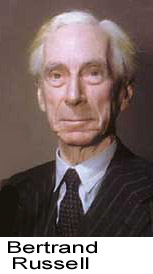
In 1935, philosopher Bertrand Russell, in On the Value of Skepticism, wrote a paragraph which I quote here:
I wish to propose for the reader's favorable consideration a doctrine which may, I fear, appear wildly paradoxical and subversive. The doctrine in question is this: that it is undesirable to believe a proposition when there is no ground whatever for supposing it true. I must, of course, admit that if such an opinion became common it would completely transform our social life and our political system: since both are at present faultless, this must weigh against it. I am also aware (what is more serious) that it would tend to diminish the incomes of clairvoyants, bookmakers, bishops and others who live on the irrational hopes of those who have done nothing to deserve good fortune here or hereafter. In spite of these grave arguments, I maintain that a case can be made out for my paradox, and I shall try to set it forth.
Surely this invites you to read the entire piece – just less than 4,500 words – which can be found at www.positiveatheism.org/hist/russell4.htm. Enjoy the work of this remarkable man.

Reader Frank Kmiec has read our item at www.randi.org/jr/2006-12/120806landmark.html#i15, and updates us on St. Isidore of Seville and his Holy Laptop. He is of the opinion that the saint is shown here in this obviously divinely-inspired illustration, doing some serious Googling. Frank writes:
I read with interest and disbelief that the Internet now has a patron Saint! Now that the internet has its very own Saint, I was compelled to update his official Holy image. Obviously St. Isidore led me to this web site: www.catholic-forum.com/saints/patron00.htm.
The Vatican has been very busy indeed!
Did you know there is a patron Saint of procrastination? This would be St. Expeditus, which makes perfect sense of course… I only need to get around to praying to him – I’ll do it tomorrow for sure!
This fascinating website to which Frank leads us gives every possible subject, situation, problem, blessing, and curse to which we could be subject – along with the name of the appropriate saint to who appeals should be sent, for solutions. As examples of problems to submit to saints, we have “stiff neck,” “twitching,” and “vanity.” “Caterpillars” can be banished by Saint Magnus of Füssen, and “slander” is handled by John Nepomucene. Specific professions can turn to certain appropriate saints; under “air crews,” we have Belgian and French crews, both of which can appeal to Joseph of Cupertino, Our Lady of Loreto, and Therese of Lisieux, while Spanish air crews have to be satisfied only with Our Lady of the Assumption.
But Mr. Kmiec has another point to make with us:
I am compelled to make some comments regarding you questioning the medical competency of chiropractors, as I have some personal insights in this matter. [http://www.randi.org/jr/2006-12/120806landmark.html#i14]
My sister is completing her medical training to be a chiropractor and I joked with her on how much more was there to learn other than cracking some joints and having the patient come back for the rest of their life. I was surprised to learn that in order to become a chiropractor (in Minnesota) she must complete more medical training than what is required to become an MD and as she will be required to pass medical board exams she will have the title of Doctor. The obvious difference (in medical training) is of course the emphasis in musculature and skeletal physiologies, however she commented she was required to complete more credits in diagnostic training than an MD would need. She explained that not everyone visiting a chiropractor needs chiropractic help, so in this case she would need to be able to refer that patient to another physician. (!) As an example, someone complaining of muscle cramps might in fact have a serious cardiac condition so she needs to have the same (if not better) level of diagnostic skills as an MD. She acknowledges there is a significant woo-woo faction in her chosen profession and she is a self-confessed woo-woo-er, but people’s lives and health are her first and foremost concern and she would not allow woo-woo beliefs putting people at risk.
Perhaps the regulations for chiropractors are not uniform as well as the attitudes of their practitioners or maybe she is just one in a million…
Frank, I really don’t know how authentic those claims are, about having to achieve regular medical standards of training, but perhaps readers can look into this for us. Since chiropractic is – by its origins – unproven and not evidence-derived, I cannot see that there is any reason to believe that your sister, even with her evidently improved view of the overall medical picture, is well-equipped to treat ailments.
Reader Ted Vriezen:
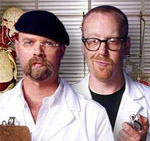
I was watching the Mythbusters holiday special. They were testing a myth about cooking a turkey microwave-style with a radio transmitter from a radio station. I noticed the call letters (KRON), of the radio transmitter they visited, and I recalled that they were mentioned in one of your commentaries, at www.randi.org/jr/2006-05/051906sylvia.html#i8. You reported that KRON changed their address number from 1001 to 1001552 based on advice from a numerologist.
Yes, and the Busters might have inquired about that strange departure from rationality while they were there doing their turkey research. If you didn’t catch that episode, I’ll tell you that there were no results with the turkey-roasting scheme, either. It just got a little warmer, but probably because of the sunny day.
Reader Paul Erickson suggests that perhaps God is – at the moment, anyway – happy with the U.S. He writes:
I read in the news that there was not a single hurricane to hit the U.S. for all of 2006 (see edition.cnn.com/2006/WEATHER/11/30/hurricanes/). So, since God sent a bunch of hurricanes in 2005 because He was pissed at the U.S. (see mediamatters.org/items/200509130004), wouldn't logic state that He must be happy with us for 2006? Where are all of the televangelists (Pat Robertson, Hal Lindsey, Charles Colson, etc., etc.) now? Shouldn't they be saying God loves the U.S.?
Good question, Paul…
Reader Ed Baehr tells us:
In a video, a guy named Paul Carpenter says that he is or will be an applicant for the big JREF bucks. See tinyurl.com/yktplo. He bends spoons. How novel. I was just wondering if you know anything about this.
Well, Ed, more and more performers are finding out just how easy the spoon-bending trick is, and they’re cashing in on it. However, we have no record of this man applying for the JREF prize, nor do I expect we will hear from him. It’s very common for such people to claim they’re applicants, when they’re not.
Steve Clennell writes to us in some – justifiable – alarm and concern about the item we outlined at www.randi.org/jr/2006-12/120806landmark.html#i5:
It was a great (and pleasant) surprise to see that you had deemed my account of an experience with Swadlincote Paranormal Investigations worthy of comment.
However, I am disturbed by some of the repercussions of this. They have been inundated by emails from people who have read on your commentary of their existence. Many of these emails have been very aggressive in tone, and some have been insulting.
I really must stress that, although I may not agree with their statements and “facts,” the Swadlincote Paranormal Investigations team were the embodiment of courtesy and had put on a very entertaining event at the request of my group. The small fee that we paid to them was not to enable them to make a profit but to cover the cost of materials, food etc. The team may well have spouted some gibberish but they earnestly believed it – they weren't trying to deceive, they were just misguided.
My comments to you were intended to be amusing in the first instance and also to provide some heartening examples of rational enquiry by younger people these days. To find that I have set off some sort of vendetta against these people is frankly mortifying and not a little embarrassing.
I don't believe for a second that you would condone such behavior, but I do feel it worth highlighting that these columns over the years have demonstrated that positive communication will raise awareness of issues surrounding quackery and may well succeed (for example) in getting a harmful Kevin Trudeau book removed from sale. On the flip-side however, aggressive and insulting communication will not have positive effects and will only reinforce the opinions of those who would believe that skeptical and rational enquiry is the realm of the nutcase or social malcontent.
I remain, as ever, a passionate follower of your work. I will, however think twice before sharing my opinions on the internet in future lest other followers of yours take it as a call to arms. (ok I'm being a tad melodramatic but I was very annoyed by these occurrences.) We should be sparking debate, not calling each other names – I mean, come on, I grew out of that in infant's school!
Agreed, Steve. You made it very clear, in your account, that these were serious people looking into aspects of their world that they wished to understand more fully. Yes, some of their conclusions would appear – to us – quite bizarre, but that is no reason to believe that these people are frivolous or careless about their research. The fact that they were quite aboveboard with their visitors, and had no objections to questions they were asked by their audience, speaks for their integrity. Of course, I must admit that nothing would please me more than to see that they had come to what I would look upon as a more rational approach than what they were expressing, and I would hope that this might be a conclusion they would arrive at after more of their investigations. I very much regret those expressions that were made to the Swadlincote Paranormal Investigations group by those who read the account here in SWIFT, and as well as I can, I express my apologies.
Reader Bob DeMers comments on the violin item from last week:
Before I figured out that I am not physically built to play the violin, I took a couple of year’s worth of lessons. My instructor was a very pragmatic sort and enjoyed discussing my technical questions about violins. He stated that, in his experience, a better violin makes it easier to get a good sound. Itzhak Perlman could make a cigar-box violin sound good, but he would have to work a lot harder to do it.
Unlike sound quality, which can be fairly easily tested (unless you are Stereophile Magazine), ease of use is a difficult metric to quantify. Of course, ease of use may also be an imagined effect!
Reader “Princhester” also has thoughts on this subject:
Prompted by your comments in the latest Swift, I thought you might like the following links.
I'm a bit of regular at the Straight Dope Message Board. Here is a long debate I participated in on the subject of whether there is any objective evidence that there is any mystical quality to Stradivarius' instruments. I think it was a good debate, though my view might be colored by my role as a significant participant: boards.straightdope.com/sdmb/showthread.php?t=291438.
What I find interesting is the way those who have woo-ish beliefs in the mystical ability of Strads, sound just like dowsers or astrologers, and twist and turn in order to avoid the possibility that their beliefs may be objectively testable. They know what will happen if such tests are run. Which segues neatly into my next link: agnews.tamu.edu/dailynews/stories/BICH/Sep2203a.htm. This is a report of a single blind test of a Strad against a modern copy. Note that the test was at best a draw, and at worst, the Strad lost.
My tin ear would not contribute much to such a test, but I would dearly love to see the editors and columnists from Stereophile Magazine agree to be subjected to such a test. They claim to have golden ears, but I think they want to keep those ears safely in their offices and away from test procedures. Otherwise, it might be discovered that they can't tell the difference between a flute and an oboe…
No matter how rational anyone is, we often find that they have a weakness in some particular respect. Following my lectures at colleges and universities, I have frequently mixed with the faculty, only to get a comment to the effect that while my points on certain aspects such as homeopathy and psychic communication with the dead are acceptable, I might have to do further research on the matter of the Bermuda Triangle – simply because someone has written a book on it! Now examine what a reader in Germany has to say on this same aspect:
My name is Juan Rey and I am from Spain, although I've been living in Germany for a number of years now. I enjoy reading Swift every Friday, and while I may not agree with you on every point, I still think you do a great job which has helped me in several ways (and reading your English is not the least important!).
Recently I had a conversation with two colleagues of mine which I think could be worth your interest. We three have arranged a car pool and therefore have some time to talk every day. On this occasion, one of my colleagues mentioned that his twelve-year-old son was ill, with fever, coughing, and with blood coming out at times. To the obvious question why he did not take him to see a doctor, he said something about a special drugstore and a homeopathic treatment he is following.
I politely expressed my doubts about the efficacy of such a treatment, and about homeopathy in general, and he said that the principle is the same as that of vaccination, which I promptly rebutted. To my delight, my other colleague supported me and even made a witty comparison between homeopathy working and "playing an air guitar" making some sound. Unfortunately, this was somewhat attenuated when he asked us to stop talking so that he could listen to the daily horoscope which happened to be on the radio at that moment...
By the way, both of my colleagues are electrical engineers. It seems that while a scientific background probably helps, it is by no means enough protection against nonsense.
Juan continued in another vein, providing evidence that there may be more to be gained from SWIFT than just the facts about the real world:
Regarding what I said about your English, below I attach a list of interesting words taken from your comments and which were new to me – and the list keeps growing!
He gave me 62 words that I had added to his vocabulary. Here are a few of them: anon, baloney, bandwagon, berserk, bogeymen, bollocks, boo-boo, brouhaha, bumbler, canard, chicanery, crackpot, crock, daft, dastard, delusion, dumbfounded, dunderhead, etc…. How I add to culture – unwittingly! – by providing such information…!
Reader Jan Willem Nienhuys comments on last week’s item at www.randi.org/jr/2006-12/120806landmark.html#i13:
#12: I believe in life after death
#13: I believe that some people can contact spirits of the dead.
In 1994, I let about all 580 first year students who were still attending math classes in the Eindhoven University of Technology, answer a questionnaire. 215 of them thought it was more probable that contact with sprits of the dead was possible, compared to life after death. 245 thought these possibilities equally likely, and 107 thought life after death was the more probable proposition. 13 didn't answer either question.
I think the explanation is that they vaguely think that only some dead people become spirits, but that the question of "life after death" is thought to refer to their own life or to a statement that is universally valid.
Think of death as an admission exam to Nothing. Some fail, and are doomed to roam the Earth and be at the beck and call of mediums and their ilk.
Question 12 would be answered differently if it had been phrased "I think at least some people become spirits after death that can be contacted."
Incidentally, traditional Christian belief is that Resurrection only occurs after the return of Christ. In the meantime, one is enjoying "eternal rest", i.e. dead.
We referred to “witch” Helen Duncan previously – see www.randi.org/jr/06-08-01.html, do a search for “Duncan.” She was the last person to be convicted of witchcraft in Britain, in 1944, following her arrest for holding a séance at her house in Portsmouth, Hants, but it was the real reason behind her arrest and detention that gets our attention. She was charged and convicted under section four of the 1735 Witchcraft Act, which was enough to put her in London's Holloway Prison for nine months. As expected during times of stress – particularly wartime – the public was turning to the supernatural for information, and so, apparently, were authorities who should have known better.
During one of her séances, Helen had been inspired to make the announcement that the British government had been covering up a disaster in the Mediterranean, a suspicion already reflected in a general buzz that information had been suppressed in the matter. On November 25, 1941, the HMS Barham, a 29,000-ton battleship, was attacking Italian convoys when it was hit by three German torpedoes, and went down within minutes with the loss of 861 lives. The official government statement had attempted to cover up the tragedy, for security and morale purposes, and Helen mumbled – in trance, of course – that their official statements were untrue. That was her undoing, but for a much more important reason, if you have any belief in woo-woo abilities – which the security agencies apparently had.
Those agencies were afraid, you see, that Helen would reveal top-secret plans for the coming D-Day landings! They took advantage of the then still-standing 200-year-old law – since taken off the books – to silence her. Now, fifty years after her death, campaigners are trying to clear her name. The woo-woo experts are of course extolling Ms. Duncan’s wondrous powers, to convince Home Secretary John Reid that the verdict should be overturned.

The evidence against Duncan was – and is – overwhelmingly negative, as readers can see from the accompanying photo. But the editor of “Psychic World,” a source of spiritual consolation to Britain’s naïve, describes Helen Duncan as “one of the world's top mediums, a woman who gave hope and comfort to many.” Well, she had been examined by a rather shaky authority, Harry Price, in 1931. Peeking into her curtained cabinet during a “trance,” he had discovered her covered with cheese-cloth, not with the traditional ectoplasm – which has always seemed so very cheese-cloth-like… He found that some of it was trailing on the floor, one end was poked up her nose, and a piece was hanging from her mouth. Following this observation, Price said:
I must say that I was deeply impressed – with the brazen effrontery that prompted the Duncans to come to my lab, with the amazing credulity of the spiritualists who had sat with the Duncans, and with the fact that they had advertised her “phenomena” as genuine.
Despite this definitive exposé, Helen continued to be accepted by the faithful – to this day – and now her rehabilitation is being sought.
In my opinion, once a fake, always a fake…

I suggest that readers go to www.ucl.ac.uk/Pharmacology/dc-bits/quack.html to see what UK professor of pharmacology, David Colquhoun, has to say about “alternative/complementary” medicine…
Registration for TAM5 is going ahead, and due to the rather more restricted conference accommodations at the new Las Vegas site, I suggest that if readers want to be part of the January 18-21 action, they should go to www.amazingmeeting.com and get registered…!
And this just in! We now have a limited number of tickets to Penn & Teller's show available at a substantial discount for Wednesday January 17th and Saturday January 20th! Again, the link is www.amazingmeeting.com...
