As James Randi continues his recovery from heart surgery, he's asked Hal Bidlack to line up some stellar guest writers for Swift.
This Week's Swift was written by Michael Shermer, of the Skeptics Society.
Randi's recovery continues and his doctors are pleased with his progress thus far. He's very grateful for all the well-wishing he's received. Thank you to everyone, and a special thank you to the folks at Skepticality who put together a "Get Well Randi" podcast just for him. That was truly a treat.
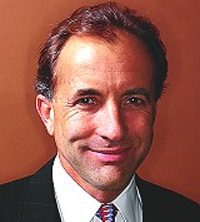
This week we are pleased to bring you a commentary by Dr. Michael Shermer. Dr. Shermer is well known to many of you, and has been a great friend to Mr. Randi and the JREF for many years. It has been my honor to introduce Michael at a couple of Amazing Meetings over the years, and I’m happy to have another chance to say nice things about him. The number of truly important skeptical thinkers in the world today is far too small. But Michael Shermer will be high on any such list. He currently heads the Skeptic Society. On that fine organization’s web page, they describe Michael this way:
Dr. Michael Shermer is the Founding Publisher of Skeptic magazine and the Executive Director of the Skeptics Society. He is an author, speaker, and producer, about whom Stephen Jay Gould said the following:
“Michael Shermer, as head of one of America’s leading skeptic organizations, and as a powerful activist and essayist in the service of this operational form of reason, is an important figure in American public life.”
Dr. Shermer is a contributing editor and monthly columnist for Scientific American, and is the host of the Skeptics Distinguished Lecture Series at Caltech. He is also the co-host and producer of the Fox Family television series, Exploring the Unknown, and serves as the science correspondent for KPCC radio, an NPR affiliate for Southern California.
Dr. Shermer is the author of Science Friction: Where the Known Meets the Unknown, about how the mind works and how thinking goes wrong. His book The Science of Good and Evil: Why People Cheat, Gossip, Share Care, and Follow the Golden Rule, is on the evolutionary origins of morality and how to be good without God. He also wrote Why People Believe Weird Things, a book that was widely and positively reviewed, and landed on the Los Angeles Times bestseller list as well as the New Sciences science books bestseller list in England. How We Believe: Science, Skepticism, and the Search for God presents his theory on the origins of religion and why people believe in God. Dr. Shermer's books also include In Darwin’s Shadow, a biography of Alfred Russel Wallace, the co-discoverer of natural selection, The Borderlands of Science, which explores the fuzzy boundary between science and pseudoscience, and Denying History, which takes on Holocaust denial and other forms of historical distortion. Dr. Shermer is also the author of Teach Your Child Science and co-author of Teach Your Child Math and Mathemagics.
Dr. Shermer received his B.A. in psychology from Pepperdine University, M.A. in experimental psychology from California State University, Fullerton, and his Ph.D. in the history of science from Claremont Graduate School. He worked as a college professor for 20 years (1979–1998), teaching psychology, evolution, and the history of science at Occidental College, California State University Los Angeles, and Glendale College. Since his creation of the Skeptics Society, Skeptic magazine, and the Skeptics Distinguished Lecture Series at Caltech, he has appeared on such shows as 20/20, Dateline, Charlie Rose, Tom Snyder, Donahue, Oprah, Sally, Leeza, Unsolved Mysteries, and more as a skeptic of weird and extraordinary claims. Dr. Shermer has also appeared in documentaries aired on A & E, Discovery, PBS, The History Channel, The Science Channel, and The Learning Channel.
When I last introduced him, this January in Las Vegas, I said that I see Michael as the intellectual successor to Dr. Sagan. He combines such wit, wisdom, and insight with being a terrifically nice fellow, and a good friend. I’m pleased to present this week’s guest commentator, Dr. Michael Shermer.
-Hal Bidlack, Temporary Commentary Guy
I believe in the power of science and humanity. Specifically, I believe that biodiversity is a good thing and that we have been rapacious in our treatment of the environment, although I think the environmental movement has greatly exaggerated our condition and that the environment is a lot more resilient than most environmentalists believe. I don’t mind eating cows and fish, but dolphins and whales have big brains and they’re cool, so I don’t think we should kill them. I drive an SUV because I haul around bicycles, books, and dogs, but as soon as there is a bigger hybrid, I’ll buy it. And although I am a libertarian heterosexual who is about as unpink (in both meanings) as you can get, I believe people should have an equal opportunity to be unequal. As for evolution, it happened. Deal with it.
I don’t know why the God question is so interdigitated with political and economic issues, but it is. It shouldn’t be. It’s okay to be a liberal Christian or a conservative atheist. I am a fiscal conservative and a social liberal. I don’t think there is a God, or any sort of anthropomorphic being who needs to be worshipped, who listens to prayers, who keeps a moral scoreboard that will be settled in the end, or who cares one iota about who wins the Super Bowl.
This is why what we do in this life matters so much—and why how we treat others in the here and now is more important than how they might be treated in some hereafter that may or may not exist. If we knew for certain that there is an afterlife, we wouldn’t have great debates about it, and philosophers wouldn’t have spilled all that ink over the millennia wrangling over it. Since we don’t know, it makes more sense to assume there is no God and no afterlife, and act accordingly. That is, act as if what we do matters now. That way, we’ll think about the consequences of what we are doing.
I am sick and tired of politicians, and just about everyone else, kowtowing to the religious right’s hypersensitivities and politically correct “tolerance” for diversities of belief—as long as one believes in God—any God will do, except the God who promises virgins in the next life to pilots who fly planes into buildings. Those of us who do not believe in god have had enough of this rhetoric. This is America. We are supposed to be good and do the right thing, not because it will make us rich, get us saved, or reward us in the next life, but because people have value in and of themselves, and because it will make us all better off, individually and collectively. It says so, right there in the Declaration of Independence, the Constitution, and the Bill of Rights—products of a secular eighteenth-century Enlightenment movement.
Religion and politics should be treated as separate entities. Religion is private and politics is public. If you want more religion, go to church. If you want more politics, go to the capitol. Don’t go to church to politic, and don’t go to the capitol to preach.
Kramer is now pursuing other opportunities, and is no longer associated with the JREF. We thank him for handling the challenge these past years, and wish him well in his new endeavors. There will be a delay in processing new challenge applications while we adjust to recent changes. Please continue to use challenge@randi.org for all challenge related correspondence.